
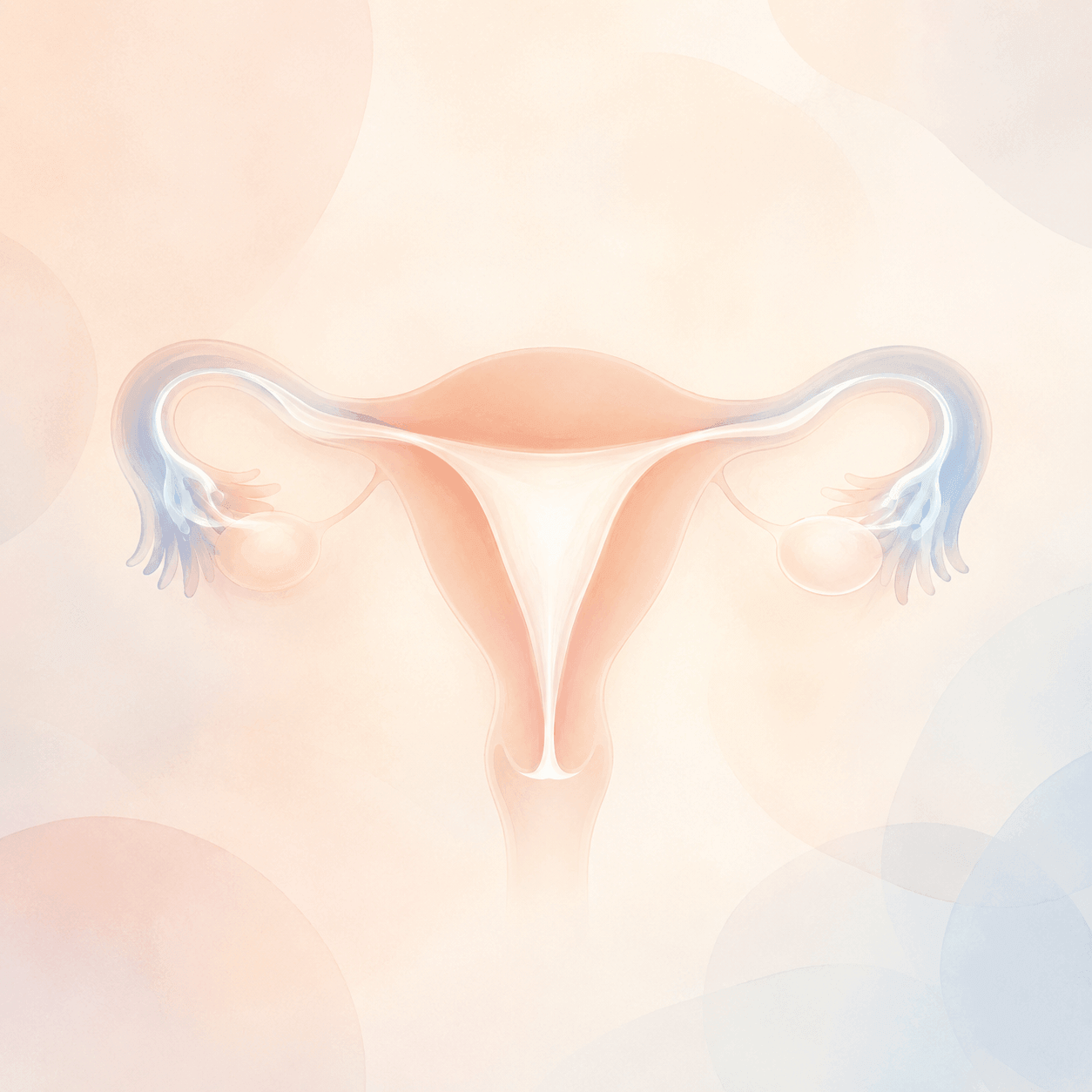
A hysterosalpingogram, or HSG, is an X-ray test that uses contrast dye to evaluate your fallopian tubes and uterus. It helps your fertility specialist determine whether your fallopian tubes are open and identify structural findings that may affect your fertility.
At Illume Fertility, an HSG is a standard part of the female fertility testing process and is completed alongside a sonohysterogram (SHG), which provides a closer look inside the uterine cavity.
Schedule Your Consult Download Testing WorkbookWhat you should know before your appointment.

Whether your fallopian tubes are open and what the X-ray reveals about the overall shape of your uterine cavity.

Typically on Cycle Days 6–12, after menstrual bleeding has stopped and before ovulation, based on your Care Team’s instructions.

A thin catheter introduces contrast fluid while X-ray images show how it moves through your uterus and fallopian tubes.

Your physician reviews your HSG alongside your SHG and other fertility test results to determine the best path forward.
Disclaimer: This content is provided for educational purposes only. It should not be used to diagnose or treat any condition. Always consult your healthcare provider for personalized medical guidance.
During an HSG, a small amount of contrast fluid is introduced into your uterus through a thin catheter while X-ray images are taken.
As the contrast moves through your uterus and fallopian tubes, your Care Team can see whether it travels through each tube and spills beyond the end. When contrast flows freely through a tube, that generally indicates that the tube is open. If the contrast does not pass through as expected, the images may suggest a possible blockage.
An HSG also outlines the uterine cavity and provides information about its overall shape. However, it does not provide the same detailed view inside the uterus as a sonohysterogram (SHG).
Your physician will interpret your HSG alongside your SHG, medical history, and other fertility testing rather than relying on one test alone.
Knowing what will happen during your HSG can make the appointment feel more manageable.
You will lie on an exam table in a position similar to a routine gynecologic exam. A speculum is placed so your provider can see your cervix, then a thin catheter is passed through the cervix into the uterus.
Contrast fluid is introduced through the catheter while X-ray images show how it travels through the uterus and fallopian tubes. Some patients experience menstrual-like cramping or pressure, particularly as the contrast is introduced. Experiences vary, but the procedure itself is brief.
Follow any instructions your Care Team gives you about pain medication or preparation before your appointment.
Most patients can return to normal activities afterward. Mild cramping or spotting can occur. Contact your Care Team if you develop increasing or severe pain, fever, heavy bleeding, or other symptoms that concern you.
Read Full HSG Guide
HSG testing is often covered by insurance when ordered as part of a fertility evaluation, but your exact coverage and out-of-pocket responsibility will depend on your individual plan.
For patients paying out of pocket, an HSG typically costs between $500 and $1,000. Other blood work, ultrasounds, consultations, or diagnostic services included in your fertility evaluation may incur separate costs.
Before testing begins, your Illume Fertility financial coordinator will verify your benefits, review your expected deductible, copay, or coinsurance, and help you understand your anticipated costs.
Note: Price ranges are estimates only and are not a guarantee of Illume Fertility’s current pricing. Actual costs may vary based on the services performed and your insurance coverage.
Schedule Your Consult Explore Financial Options
At Illume Fertility, both tests are included in the standard female fertility evaluation because each provides different information about your reproductive anatomy.
Outlines the uterine cavity and provides information about its overall shape and structure.
Shows whether contrast can pass through each fallopian tube, helping identify a possible blockage.
Provides tubal findings that can influence which fertility treatment options your physician recommends.
Uses sterile saline and ultrasound to create a detailed view of the inside of the uterine cavity.
Helps identify polyps, fibroids, scar tissue, or other abnormalities that may affect the uterine cavity.
Adds detailed uterine information that helps your physician develop a more complete, personalized treatment plan.
Learn about other common tests included in a fertility evaluation.

Some research suggests that pregnancy rates may temporarily increase after an HSG due to the tubal-flushing effect, particularly when oil-based contrast is used.
A large randomized controlled trial published in The New England Journal of Medicine found higher ongoing pregnancy and live birth rates after HSG with oil-based contrast compared with water-based contrast.
However, HSG is performed primarily as a diagnostic test, not a fertility treatment. ASRM notes that any short-term fertility benefit remains uncertain, does not occur for everyone, and cannot overcome other causes of infertility.
An HSG can cause cramping or discomfort, but the experience varies significantly from person to person. Some patients describe mild pressure or menstrual-like cramps, while others find the contrast portion of the procedure more uncomfortable.
The cramping most often occurs as the uterus fills with contrast fluid. The imaging portion of the procedure is brief, and discomfort generally improves once the contrast has been introduced and the procedure is complete.
It is completely reasonable to feel nervous about an HSG, especially if you have experienced painful pelvic exams or have a history of pelvic pain or trauma. Always tell your Care Team beforehand if pain or anxiety is a concern. They can explain each step, discuss pain management options, and help you feel more confident before the HSG procedure.
During an HSG, contrast fluid is introduced into your uterus through a thin catheter while X-ray images show whether the fluid can pass through your fallopian tubes.
When you arrive, you will be asked to review and sign a consent form and may also be asked to provide a urine sample.
During the procedure:
You may experience temporary cramping or pressure as the contrast is introduced. Plan for approximately 30 minutes for the appointment, although the imaging portion itself is brief.
Preparation for an HSG is usually simple, but you should always follow the instructions provided by your specific fertility clinic.
Before your appointment, tell your Care Team if you:
Your Care Team may also recommend taking an over-the-counter pain reliever before the procedure to help reduce cramping. HSG is generally scheduled after menstrual bleeding has ended and before ovulation to avoid performing the procedure during pregnancy.
HSG results primarily show whether your fallopian tubes appear open or blocked and provide information about the shape of your uterine cavity.
If contrast travels through a fallopian tube and spills beyond its end, the tube is considered open. If the contrast does not pass through as expected, the test may suggest a blockage.
However, an apparent blockage (especially close to where the tube meets the uterus) does not always mean the tube is permanently blocked. Temporary muscle contractions or other factors can affect the result, so your fertility specialist may recommend additional evaluation before confirming a diagnosis.
An HSG is performed after your menstrual period has ended but before ovulation, when there is little to no chance of an early pregnancy.
At Illume Fertility, HSG testing is typically scheduled on Cycle Days 6–12. Your Care Team will give you specific scheduling instructions based on your cycle.
If you are unsure which day counts as "Cycle Day 1" or when to contact your team, review the fertility testing process.
An HSG can sometimes suggest abnormalities inside the uterine cavity, but it is not the best test for diagnosing polyps, fibroids, scar tissue, or endometriosis.
Because contrast outlines the uterine cavity, an HSG may reveal an abnormal contour or filling pattern. However, a sonohysterogram (SHG) provides a more detailed view of the uterine cavity and is better at identifying abnormalities such as polyps, submucosal fibroids, and scar tissue.
An HSG cannot diagnose endometriosis and cannot reliably identify fibroids located within the muscular wall or outside of the uterus.
If an HSG suggests that one or both fallopian tubes are blocked, your fertility specialist will consider where the blockage is located, whether it appears to be a true obstruction, and how the finding fits with the rest of your fertility evaluation.
If one fallopian tube is blocked and the other is healthy and open, pregnancy may still be possible, and a single blocked tube does not automatically mean you will need IVF. ASRM notes that some patients with unilateral proximal tubal blockage may not require intervention when the remaining tube appears normal.
If both fallopian tubes appear blocked, additional evaluation may be needed before confirming a permanent blockage. This is especially true when the blockage appears close to the uterus, because temporary muscle contractions or catheter positioning can sometimes affect HSG results. ASRM recommends further evaluation when HSG suggests bilateral proximal tubal obstruction.
If a true blockage is confirmed, treatment depends on the location and extent of the tubal damage, your age, ovarian reserve, other fertility factors, and your family-building goals. Options may include additional procedures or surgery in selected cases, or in vitro fertilization (IVF), which bypasses the fallopian tubes.
If a blocked tube is enlarged and filled with fluid, known as a hydrosalpinx, treatment recommendations may differ because hydrosalpinx can affect fertility and IVF outcomes.
An HSG may occasionally help clear a minor obstruction, but it should primarily be considered a diagnostic test—not a treatment for blocked fallopian tubes.
Some apparent blockages near the uterus are caused by mucus, debris, or temporary tubal spasm rather than permanent scarring. ASRM notes that a substantial proportion of proximal blockages seen on an initial HSG are found to be open when testing is repeated.
If your HSG suggests a blockage, your fertility specialist will determine whether additional evaluation or treatment is needed based on the location and suspected cause.
At Illume Fertility, testing is more than a checklist.
Your results are reviewed together by an experienced fertility team that looks at the full picture of your reproductive health and helps you understand what it means for your next steps.
From your very first consultation, our board-certified reproductive endocrinologists, clinical team, wellness professionals, and financial coordinators work together to provide personalized guidance, clear answers, and a plan built around your goals.
Schedule Your Consult Download Testing Workbook