
Maybe you’ve been trying to conceive longer than expected. Maybe your cycles are irregular, something feels off, or you’re starting to wonder if waiting longer will only make things harder.
You don't need to have everything figured out before asking for help.
Whether you’re trying to conceive now, planning ahead, or exploring family-building options with a donor or surrogate, fertility testing helps you understand where things stand and what to do next.

Schedule Your Consult Download Testing Workbook
A quick overview of what fertility testing involves and when to seek care.

A diagnostic fertility workup evaluates hormones, ovulation, ovarian reserve, the uterus, fallopian tubes, and sperm health.
Results can help identify factors that may be affecting fertility.

Seek fertility testing after 12 months if you’re under 35, after 6 months if you’re 35–40, or right away if you’re over 40. Test sooner if you have irregular cycles, PMOS (formerly PCOS), endometriosis, recurrent pregnancy loss, or male fertility concerns.

Fertility testing is helpful for anyone trying to conceive or planning future family building, including fertility preservation, donor conception, or gestational surrogacy, guiding next steps based on your diagnosis and goals.
Some plans cover diagnostic testing even when fertility treatment coverage is limited.
Coverage depends on the employer and plan type. Connecticut and New York both have fertility benefit mandates, but the specifics depend on your employer and your plan.
Your Illume Fertility financial coordinator will help you verify any insurance benefits before testing begins, so you know what's covered (and what's not) before you start.
Learn More About Insurance Call Our TeamExplore each test through the full guides linked below.
Genetic testing answers different questions than fertility testing. Explore screening for inherited conditions, embryo testing, and get support understanding your results.
Every patient at Illume begins with a diagnostic workup before starting fertility treatment. This complete picture of your hormones, anatomy, and reproductive health helps your doctor design a treatment plan tailored to your specific diagnosis and goals.
A full evaluation may identify or raise concern for ovulatory disorders, diminished ovarian reserve, uterine or tubal factors, thyroid dysfunction, or male-factor infertility. These are common contributors to fertility struggles, and many people live with invisible barriers for years before being diagnosed.
Identifying potential issues early can help your treatment plan address them sooner. Fertility testing gives your Care Team the information needed to recommend the right next steps.

Schedule Your Consult Download Testing Workbook
Fertility testing isn't only for patients experiencing infertility.
For LGBTQ+ families, single parents by choice, and anyone planning around donor sperm, donor eggs, reciprocal IVF, or a gestational surrogate, testing helps you choose the right pathway and time your treatment well.
We also support fertility preservation for patients preparing for cancer treatment, gender-affirming care, or other medical treatment that may affect future fertility. Whatever path you're on, your evaluation is tailored to your goals, your timeline, and the family you're working to build.

Explore LGBTQ+ Fertility
Fertility testing typically involves multiple appointments, which can feel frustrating when you want answers quickly. Different tests need to be completed at specific points in the menstrual cycle or after other results are available.
Understanding why this timing varies can make the process feel more manageable and help you know what to expect.
In this video, Illume Nurse Practitioner Monica Moore, MSN, APRN, explains why fertility testing is scheduled over several appointments and how each step contributes to a more complete evaluation.
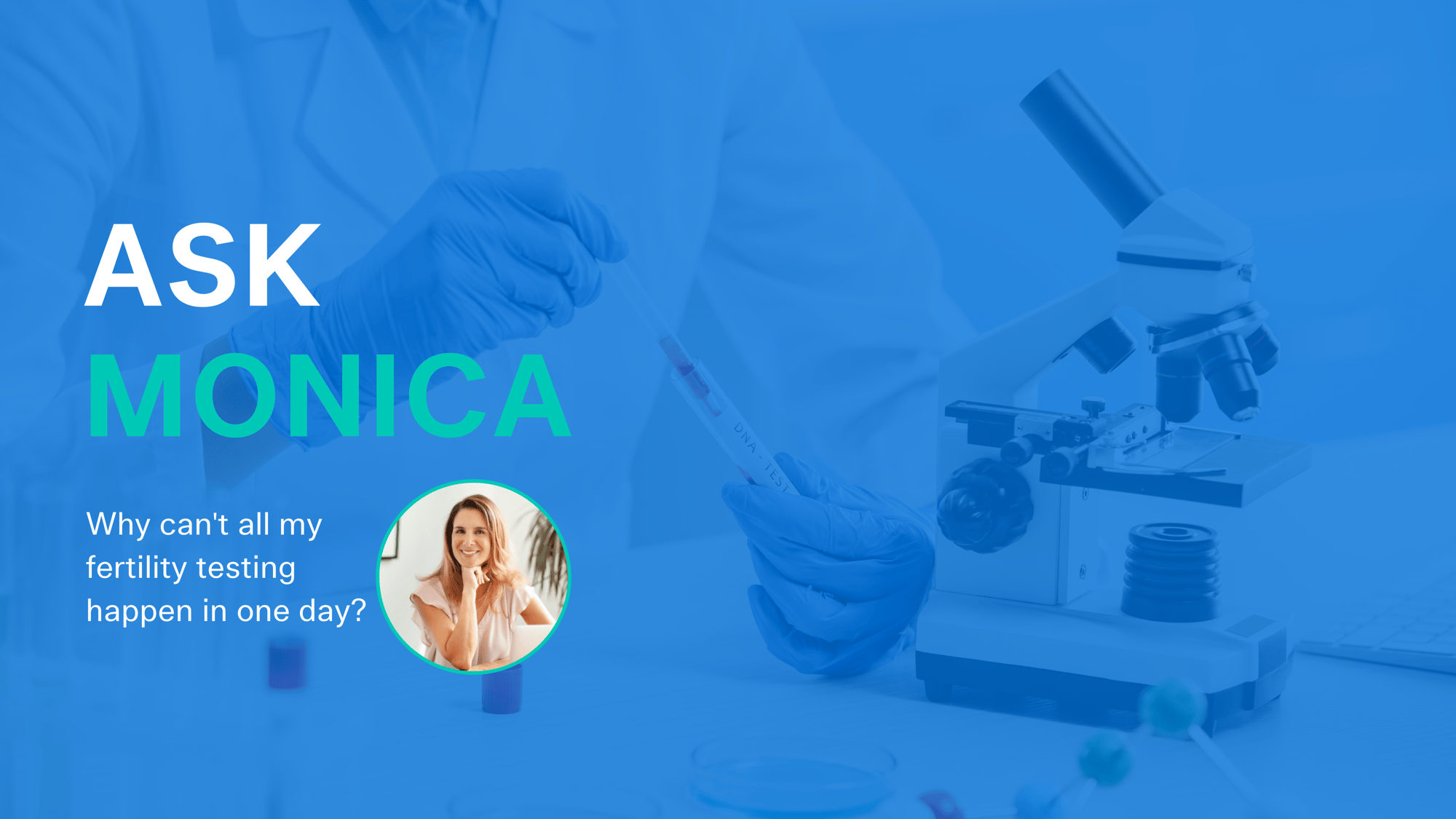
Most patients complete fertility testing within one menstrual cycle, roughly four to six weeks from your first appointment to your results review, since several tests are timed to specific days of your cycle.
For LGBTQ+ patients and single parents-to-be, this window may also include semen analysis, genetic carrier screening, donor coordination, surrogate screening, or other diagnostic and planning steps specific to your path to parenthood.
Your doctor will walk you through which tests may apply to you at your first consultation, so you know exactly what's ahead before testing begins.
Once your doctor has a complete picture, you'll sit down together to go over results and decide what comes next.
Reach out by phone or this form. A New Patient Liaison follows up within 48 hours to book your first appointment.
A 1-hour consult (virtual or in-person) with your reproductive endocrinologist to discuss your history and goals.
Blood work performed at specific points in the menstrual cycle assesses key hormone levels and ovarian function, giving your doctor a clear baseline.
Your evaluation may include ultrasound, an HSG or saline sonogram, semen analysis, and other testing based on your history and family-building plan.
Your doctor walks you through each test result, then works with you to map out the best path forward for your situation.
Illume Fertility is a Society for Assisted Reproductive Technology (SART) member clinic. Our reproductive endocrinologists are board-certified in both Reproductive Endocrinology and Infertility and Obstetrics and Gynecology. All are members of the American Society for Reproductive Medicine (ASRM).
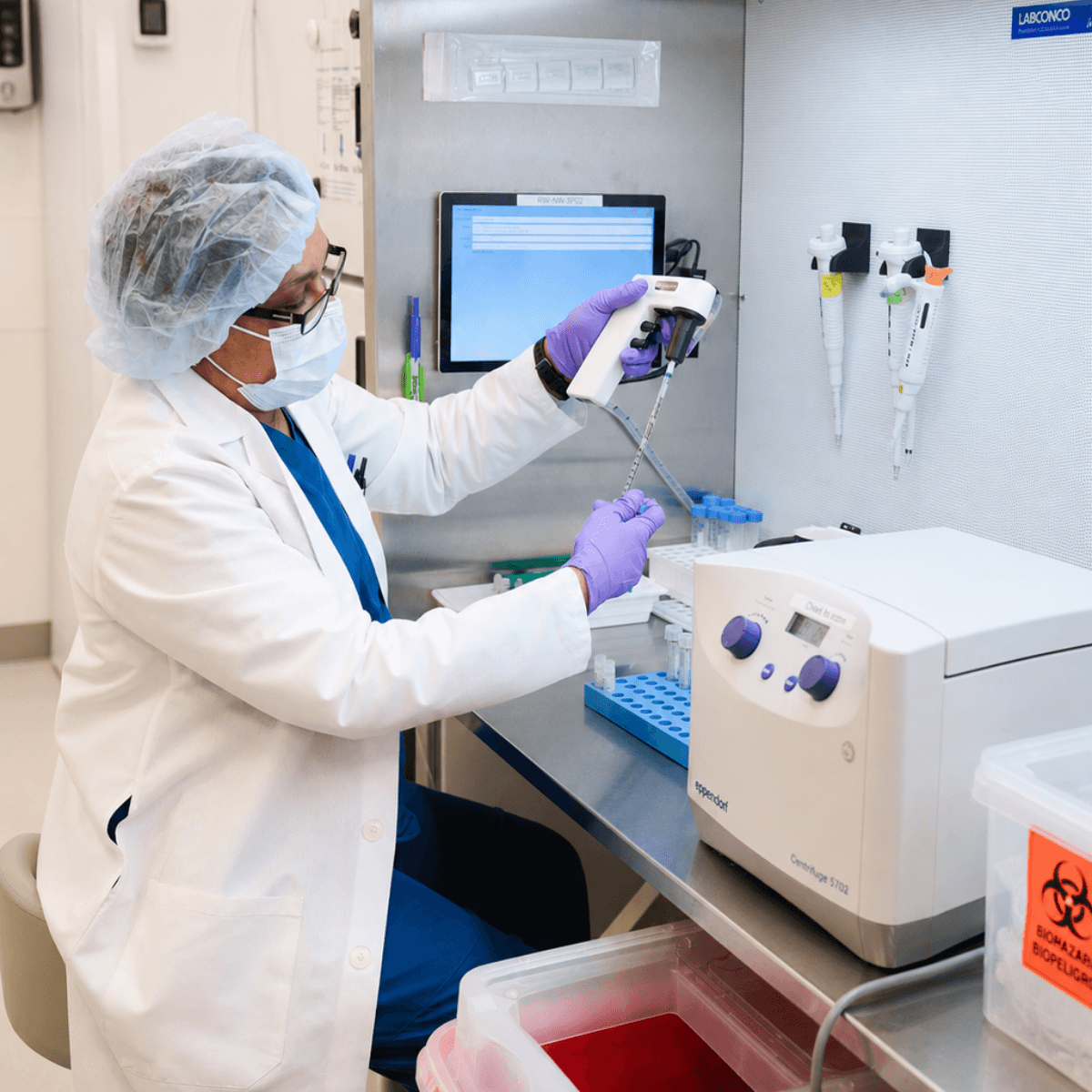
Most samples are processed by our in-house embryology and andrology teams. Illume’s IVF laboratory is accredited by the College of American Pathologists (CAP) and certified under the Clinical Laboratory Improvement Amendments (CLIA).
If testing identifies structural concerns, such as polyps, fibroids, or scar tissue, our board-certified reproductive endocrinologists can perform procedures like hysteroscopy and laparoscopy in Illume’s AAAHC-accredited onsite surgical suite. This keeps your care with the team that already knows your history and treatment plan.
Semen analyses are evaluated by Illume’s in-house andrology team, keeping samples under one roof from start to finish.
View IVF Success Rates Meet Our Fertility Specialists
Dive deeper with our 30-page guide, written by Illume Nurse Practitioner Monica Moore, MSN, APRN. It includes honest, detailed test explanations plus a printable calendar to track it all as you go.
Fill out the form to get your free Fertility Testing Workbook now.
If you’re under 35, most doctors recommend testing after 12 months of trying. At 35 or older, that recommendation drops to 6 months. If you’re over 40, talk with a fertility specialist about evaluation right away.
You may also want to test sooner with irregular cycles, known reproductive or genetic conditions, recurrent pregnancy loss, male fertility concerns, or if you're planning egg freezing, donor conception, or another path that doesn't start with trying to conceive on your own.
Most testing is well tolerated, and blood work and ultrasound are routine for the vast majority of patients. HSG and saline sonography may cause brief cramping.
During an HSG, contrast dye flows through the uterus and fallopian tubes. During a saline sonogram, sterile saline expands the uterine cavity so it can be examined by ultrasound. If your Care Team says ibuprofen is safe for you, taking it beforehand can help. Discomfort usually passes within a few minutes after the procedure ends.
If you have a history of pelvic pain, sexual trauma, or find procedures like these anxiety-inducing, please tell your Care Team beforehand so they can walk you through exactly what to expect and ensure you feel as comfortable as possible throughout.
A fertility workup commonly evaluates hormone levels, ovulation, ovarian reserve, the uterus, fallopian tubes, and sperm health when applicable. Your evaluation may also include an HSG or saline sonogram based on your history and treatment plan.
Genetic carrier screening may be recommended as well.
Your doctor will customize your diagnostic plan to your history, age, and family-building goals.
Most patients complete a full fertility workup within one menstrual cycle, roughly four to six weeks from the first appointment to your results review.
Some tests, like Day 3 bloodwork, have to be performed during a specific window early in the menstrual cycle, which is why timing matters more than how quickly you move through the process.
If you’ve been trying to conceive and a standard infertility evaluation finds no clear cause, the diagnosis may be referred to as unexplained infertility. Up to 30% of couples experiencing infertility receive this diagnosis after a standard evaluation.
Your doctor may recommend continuing to try on your own for a period of time, IUI with ovarian stimulation, or IVF based on your age, timeline, and goals.
Need a little hope? Read success stories from other Illume families who have overcome unexplained infertility with the help of fertility treatment.
Source: ASRM
Coverage depends on your health insurance plan and whether your state mandates fertility coverage, among other factors.
Connecticut and New York both have fertility insurance mandates, but the specifics vary by employer and plan. At Illume Fertility, every patient is assigned a financial coordinator to help verify your benefits and understand your policy before testing begins.
We encourage you to call your insurance carrier or speak with your HR department for additional clarity. These questions are a good starting point:
Learn more about affording fertility testing and treatment by exploring our Finance Hub.
On October 15, 2023, the American Society for Reproductive Medicine (ASRM) Practice Committee issued a new definition of infertility.
Infertility is a disease, condition, or status characterized by any of the following:
Most importantly, ASRM adds, "Nothing in this definition shall be used to deny or delay treatment to any individual, regardless of relationship status or sexual orientation."
Fertility testing is often an integral part of LGBTQ+ family building. It can help guide donor selection, reciprocal IVF planning, decisions about which partner carries the pregnancy, and treatment timing.
Anyone who produces sperm, including transgender women and some nonbinary patients, may need a semen analysis regardless of gender identity.
Testing can often be adapted for patients assigned female at birth who do not currently menstruate. The recommended tests and timing depend on anatomy, hormone use, medical history, and family-building goals.
Some fertility test results remain current for about six months, but there is no universal expiration date. Retesting windows vary by test, treatment plan, insurance requirements, and clinical history. Your Care Team will confirm which results need updating.
If you complete testing and aren't ready to start treatment right away, your doctor will let you know closer to the six-month mark whether anything needs to be repeated before you move forward.
Tip: If you’ve already met your insurance deductible, completing covered testing before the plan year resets can lower what you pay for those tests. Confirm coverage, timing, and retesting requirements with your insurance carrier and Illume financial coordinator before scheduling.
You don't have to wait until concerns feel urgent to seek answers about your fertility. If you have questions, fertility testing can help you better understand your reproductive health and identify the path that may be right for you.
At Illume Fertility, we provide compassionate, evidence-based guidance throughout the entire testing process, helping you feel informed, supported, and confident as you move forward.
Schedule Your Consult Download Testing Workbook