Day 21 testing refers to a progesterone blood test performed during the second half of the menstrual cycle. It helps your doctor determine whether ovulation likely occurred and is one part of the broader fertility testing process.
Despite the name, your test may not actually happen on Cycle Day 21. Your Care Team will determine the right timing based on your individual cycle.
Schedule Your Consult Download Testing WorkbookWhat to know before your appointment.
Your progesterone level, which helps your doctor determine whether ovulation likely occurred.

Approximately seven days before your next expected period, not always on Cycle Day 21.

A simple blood draw that involves no prep, no fasting, and no recovery time.

Results are typically available within a few days and reviewed with your doctor during a follow-up visit.
Fertility testing takes place at specific times in your cycle, giving your doctor important insights into your reproductive health that help to create your personalized treatment plan.
Blood work and a transvaginal ultrasound establish your baseline fertility and assess the ovaries, uterus, and antral follicle count.

A hysterosalpingogram (HSG) and saline sonogram (SHG) evaluate the uterine cavity and fallopian tubes after your period and before ovulation.

A progesterone blood test performed about seven days before your next expected period helps determine whether ovulation likely occurred.

Meet with your doctor to review all test results and discuss recommended next steps, including treatment options.
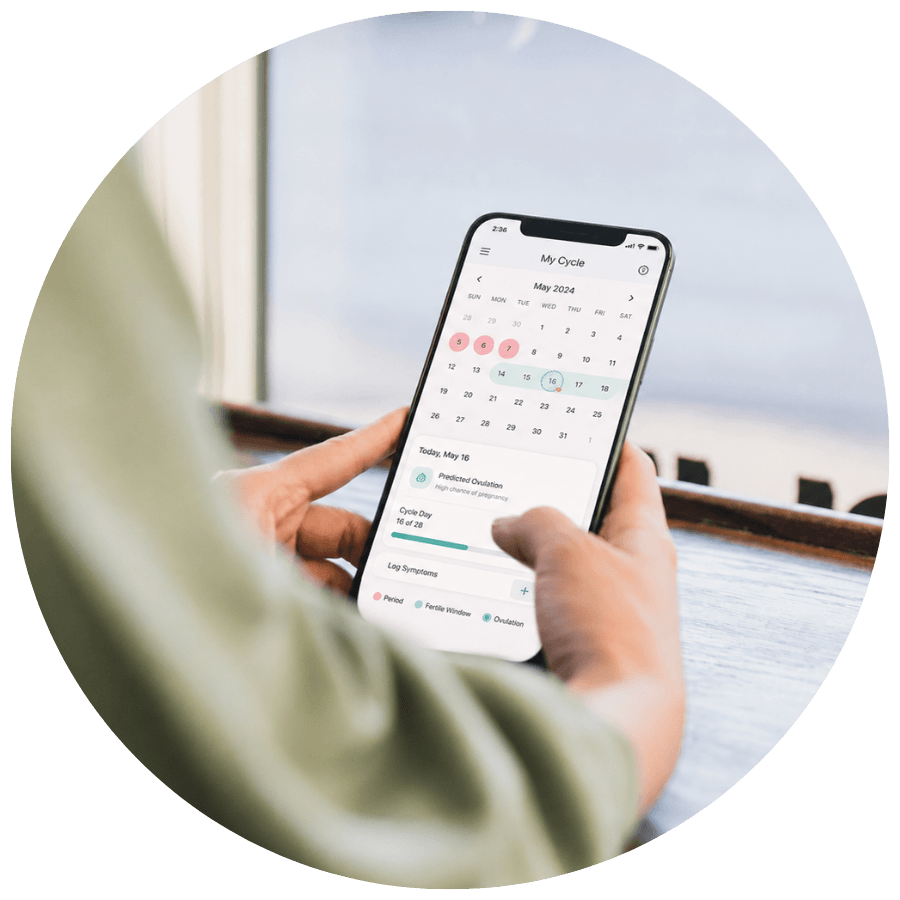
Despite its name, this test isn't always performed on Cycle Day 21. It is typically scheduled approximately one week before your next expected period, when progesterone should rise following ovulation.
For a typical 28-day cycle, testing may occur around Day 21. For a 35-day cycle, it may occur closer to Day 28. If your cycles are irregular, your Illume Care Team will determine the appropriate timing based on your cycle pattern.
This approach aligns with ASRM guidance, which recommends timing progesterone testing according to the expected next period rather than using one fixed cycle day.
Want to learn more? Watch Illume Nurse Practitioner Monica Moore explain the importance of Day 21 testing →

Schedule Your Consult Read Day 21 GuideDay 21 blood work is often covered by insurance as part of a diagnostic fertility evaluation, even when fertility treatment coverage is limited. For patients paying out of pocket, Day 21 progesterone testing typically costs $50–$100.
Your Illume Fertility financial coordinator will always verify your benefits and explain your anticipated costs before testing begins.
Note: Price ranges are estimates only and are not a guarantee of Illume Fertility’s current pricing; actual costs may vary based on services and insurance coverage.

Schedule Your Consult Explore Financial Options
Learn more about other tests that may be included in your fertility evaluation.

Despite its name, a Day 21 progesterone test is not always performed on Cycle Day 21. It is generally scheduled about one week before your next expected period, when progesterone should be elevated following ovulation.
For someone with a typical 28-day cycle, testing may occur around Day 21. With a 35-day cycle, it may occur closer to Day 28. If your cycles are irregular, Illume’s Care Team will consider your cycle pattern and expected ovulation timing to determine the most appropriate date for your blood draw.
Your result will be reviewed alongside your cycle history and other fertility testing, rather than interpreted as a standalone number. Learn more in our complete guide to Day 21 fertility testing.
This timing aligns with ASRM's guidance, which recommends measuring progesterone approximately one week before the next expected period rather than on one fixed cycle day.
After ovulation, the follicle that released the egg becomes the corpus luteum and begins producing progesterone. This hormone helps prepare the uterine lining for a possible pregnancy. The blood test measures this post-ovulation hormone activity as one part of your broader fertility evaluation.
Cycle Day 1 is the first day of full menstrual flow—not light spotting. Accurately identifying this day helps your Care Team schedule tests for the points in your cycle when they will provide the most useful information.
When instructed, contact Illume at the beginning of your period so your appointments can be scheduled appropriately. You can also review how Day 21 testing fits into the complete fertility testing process.
The appointment is typically brief because it involves a standard blood draw at the clinic. Collecting the sample itself usually takes less than five minutes, although your total visit time may vary if other testing or consultations are planned.
There is no recovery period, and you can immediately return to work and other usual activities.
No. Day 21 progesterone testing is designed to help confirm whether ovulation likely occurred and whether progesterone rose appropriately afterward. A higher progesterone level may be consistent with the post-ovulation phase, but it cannot confirm pregnancy because progesterone can rise during any ovulatory cycle.
Pregnancy is confirmed through a separate urine or blood test that detects human chorionic gonadotropin, or hCG. When pregnancy testing is appropriate, your Illume Care Team will tell you when to complete it. Learn more about how pregnancy tests measure hCG from the National Library of Medicine.
A lower result may suggest that ovulation did not occur or may not clearly confirm that ovulation occurred. Because progesterone levels fluctuate and timing matters, one result should not be used by itself to make a diagnosis or predict your future chances of conceiving.
Your Illume physician will review when the blood sample was collected, your cycle history, and the rest of your test results before recommending any additional evaluation or treatment. Our Day 21 testing guide explains progesterone results in greater detail.
A higher Day 21 progesterone result is uncommon and is not typically a concern on its own. Your physician will interpret the result alongside your symptoms, medical history, cycle timing, and other test results rather than treating one elevated number as a diagnosis.
At Illume Fertility, our onsite lab processes Day 21 test results quickly, with results typically available within 1–2 days. You will meet with your doctor once testing is completed to discuss your progesterone level in the context of your full fertility workup.
There is no single progesterone range that applies to every patient or laboratory. A single progesterone result can help confirm recent ovulation, but it cannot evaluate the overall quality of the luteal phase.
ASRM similarly recommends interpreting serum progesterone according to cycle timing and notes that levels can fluctuate significantly within a few hours.
Explore progesterone levels, testing timing, and common questions in our complete guide to Day 21 fertility testing.
No single fertility test tells the whole story. By reviewing your hormone levels, ovarian reserve, reproductive anatomy, and other factors together, our specialists can better understand what may be affecting your fertility.
Illume Fertility is here to guide you through each step, explain your results, and help you determine what comes next.
Schedule Your Consult Download Testing Workbook