
PGT-SR is an optional test for embryos created through IVF when an egg or sperm provider carries a structural chromosome rearrangement. It looks for missing or extra chromosome material related to that known rearrangement.
A carrier is often healthy, but some eggs or sperm can contain an unbalanced amount of chromosome material. PGT-SR can provide more information before embryo transfer, but it cannot test for every genetic condition or guarantee pregnancy or a healthy baby.
Schedule Your Consult Explore All PGT TypesGet a clear overview of what PGT-SR is and what happens before testing begins.

Looks for missing or extra chromosome material related to a known structural rearrangement.

May be considered when an egg or sperm provider carries a balanced translocation, inversion, or another testable rearrangement.

The genetics laboratory reviews the carrier’s chromosome report before IVF to confirm that testing is feasible.

Some methods cannot distinguish embryos with a typical chromosome arrangement from balanced-carrier embryos.
Disclaimer: This information is for educational purposes only and is not a substitute for personalized medical care or genetic counseling.
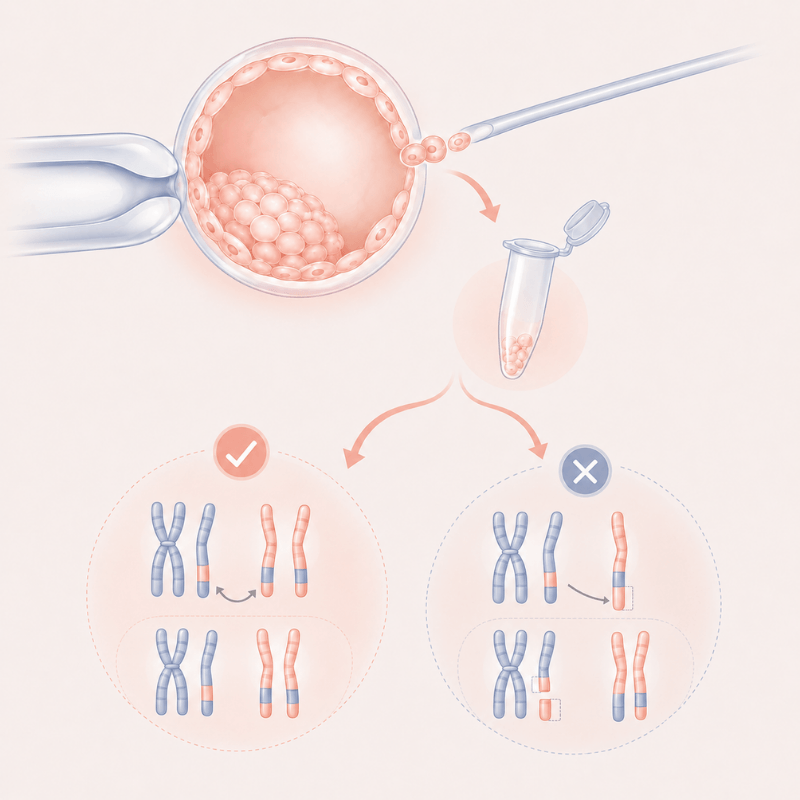
Preimplantation genetic testing for structural rearrangements, or PGT-SR, examines embryo samples for chromosome imbalances related to a known rearrangement in an egg or sperm provider.
Chromosomes are packages of DNA that contain our genes. A structural rearrangement means that chromosome material has changed position or organization. The overall amount of genetic material can remain balanced in the carrier, so the person often has no related health concerns.
Eggs or sperm from a carrier can still receive an unbalanced combination of chromosome material. An embryo may then have a missing segment, an extra segment, or both. These differences can affect implantation, pregnancy development, miscarriage risk, or a future child’s health.
PGT-SR can only be performed on embryos created through in vitro fertilization (IVF). It does not change an embryo’s DNA.
PGT-SR differs from PGT-A, which screens embryos for chromosome-number differences without requiring a known parental rearrangement. It also differs from PGT-M, which targets a specific single-gene condition.
PGT-SR may be discussed after chromosome testing identifies a structural rearrangement in a person providing eggs or sperm. Examples include:
Recurrent pregnancy loss alone does not establish a need for PGT-SR. A confirmed chromosome rearrangement is usually required. A genetic counselor can review the exact report, explain the reproductive risks, and determine whether a PGT laboratory can test the finding.

PGT-SR requires special planning before an IVF cycle begins. Illume’s fertility specialists, genetic counselors, embryologists, and an outside genetics laboratory work together to coordinate the process.

Terminology and result categories vary by laboratory, but reports may include the following.

The tested sample shows no detectable missing or extra chromosome material related to the familial rearrangement. Some laboratories group embryos with a typical chromosome arrangement and balanced-carrier embryos together.

The tested sample shows missing or extra chromosome material related to the structural rearrangement. The possible effect depends on the chromosomes involved and the size and location of the imbalance.
If the test includes broader chromosome screening, the report can identify a chromosome-number or segmental finding unrelated to the known rearrangement. The laboratory’s terminology and reporting policies determine how these findings appear.

The PGT laboratory could not confidently classify the sample.
Poor DNA quality, low DNA quantity, contamination, or other technical factors may sometimes lead to an inconclusive result.
Rebiopsy may be an option in some cases.
Ask whether the selected PGT-SR method can distinguish a typical chromosome arrangement from the same balanced rearrangement carried by the egg or sperm provider. Many copy-number methods cannot make that distinction. A balanced-carrier embryo is usually expected to be healthy, but it could face the same reproductive risks later in life.
Learn what PGT-SR can and cannot determine.
Identifies embryo samples with missing or extra chromosome material related to the known rearrangement.
Adds chromosome information to embryo development and grading when deciding which embryo may be considered for transfer.
May reduce the chance of transferring an embryo with an unbalanced form of the familial rearrangement.
Provides information before embryo transfer rather than waiting for pregnancy chromosome testing.

PGT-SR does not assess every gene, chromosome condition, birth defect, or health concern.
Very small segments, uncertain breakpoints, and complex rearrangements can fall outside a laboratory method’s detection limits.
A normal or balanced result does not guarantee successful implantation, pregnancy, live birth, or a healthy baby.
Some IVF cycles do not produce an embryo with a result that supports transfer under the agreed treatment plan.

Important Considerations
PGT-SR can be highly accurate for the chromosome imbalance it was designed to assess, but no embryo test is perfect. It analyzes a small sample of cells from the embryo’s outer layer, called the trophectoderm, rather than every cell in the embryo.
False-positive, false-negative, and inconclusive results are possible. Test performance can depend on the rearrangement, segment sizes, breakpoint locations, laboratory method, and quality of the DNA sample. The ESHRE PGT Consortium’s laboratory guidance calls for case-specific risk assessment and clear disclosure when a method cannot detect every possible unbalanced outcome.
Modern blastocyst biopsy removes a few cells from the trophectoderm. ASRM laboratory guidance describes biopsy and genetic testing as established embryology laboratory services that require trained staff, written procedures, quality control, and careful specimen tracking. No laboratory procedure is risk-free, and no individual embryo is guaranteed to survive biopsy, freezing, or warming.
PGT-SR is not a prenatal diagnostic test. Pregnancy screening and diagnostic options should still be reviewed with an obstetric provider or prenatal genetic counselor. ACOG guidance on preimplantation genetic testing states that false-positive and false-negative results can occur and that prenatal screening or diagnostic testing should still be offered after PGT.
A person with a balanced rearrangement usually has all the expected chromosome material. Some pieces are simply organized differently. That arrangement often has no effect on the carrier’s health.
During egg or sperm formation, the rearranged chromosomes must separate. The resulting egg or sperm can contain:
After fertilization, an embryo with extra or missing chromosome material may not implant, may lead to pregnancy loss, or may result in a child with a chromosome condition. The outcome depends on the exact rearrangement and amount of chromosome material involved.
The proportion of normal, balanced, and unbalanced embryos varies widely. A simple percentage cannot describe every translocation or inversion. Each embryo represents a separate chromosome event, so one IVF cycle may not match the expected distribution.
Age at egg retrieval, ovarian reserve, fertilization, blastocyst development, and unrelated chromosome findings can further affect the number of embryos available for transfer.

Schedule Your Consult Explore All PGT Options
Explore related information about embryo testing, pregnancy loss, and genetic counseling.

Get answers about balanced rearrangements, costs, results, and prenatal confirmation.
PGT-SR costs vary based on the rearrangement, genetics laboratory, number of embryos tested, and amount of case-specific preparation required. Expenses can include:
Total costs depend on the laboratory method and whether broader chromosome screening is included. Insurance and fertility-benefit coverage vary by plan. Your Illume financial coordinator can confirm current treatment, laboratory, biopsy, cryopreservation, and shipping costs.
Visit Illume’s Fertility Finance Hub for more information about insurance and financing.
Yes. A balanced translocation changes the position of chromosome material without creating a meaningful net gain or loss. Many carriers have no related health concerns and learn about the rearrangement only after chromosome testing.
The reproductive effect occurs during egg or sperm formation. Some eggs or sperm can receive an unbalanced amount of chromosome material, which can affect fertility, pregnancy, or a future child’s health.
No. PGT-SR may reduce the chance of transferring an embryo with an imbalance related to the known rearrangement. Pregnancy loss can still occur for many other chromosomal, uterine, hormonal, medical, and unexplained reasons.
A normal or balanced PGT-SR result does not guarantee implantation or an ongoing pregnancy.
Sometimes. Many PGT-SR methods identify whether an embryo has extra or missing chromosome material but cannot distinguish a typical chromosome arrangement from the same balanced rearrangement carried by the parent.
Some laboratories can make that distinction in selected cases through a method designed around the rearrangement. Ask the genetics laboratory what its test can report before IVF begins.
Usually, yes. A karyotype or another diagnostic chromosome report defines the rearrangement and its breakpoints. The genetics laboratory uses that information to evaluate reproductive risks and test feasibility.
Records from a previous pregnancy, child, or relative with an unbalanced result can provide useful case information too. Your genetic counselor will tell you which records the laboratory needs.
The testing method often examines all chromosomes, but the scope and reporting can vary. PGT-SR focuses on unbalanced chromosome material related to a known parental rearrangement. PGT-A screens more broadly for extra or missing chromosomes.
The tests answer different clinical questions. Your physician and genetic counselor can explain whether the planned analysis includes unrelated whole-chromosome, segmental, or mosaic findings.
Sometimes. Embryos that were frozen without biopsy may need to be warmed, biopsied, and frozen again. A genetics laboratory can sometimes use DNA remaining from a prior biopsy, depending on the original testing method and sample status.
Another biopsy or freeze-thaw cycle adds embryo handling. Illume’s physician, embryology, and genetics teams will review the embryos’ history before recommending a plan.
Your physician and genetic counselor will review every result before you decide what comes next. Options can include another IVF cycle, further laboratory review, continued embryo storage, use of donor eggs or sperm, donor embryos, or another family-building path.
An unbalanced result does not require an immediate embryo disposition decision. You can take time to understand the report, laboratory policies, and your choices.
No. PGT-SR examines a small sample of cells from an embryo before transfer. It does not test every cell and cannot guarantee that the result represents the entire embryo.
Prenatal screening and diagnostic testing should still be discussed after pregnancy. Chorionic villus sampling and amniocentesis can provide diagnostic chromosome information during pregnancy.
No. Feasibility depends on the rearrangement type, chromosome breakpoints, segment sizes, complexity, and laboratory method. Very small or complex imbalances can fall below a test’s resolution.
The genetics laboratory must review the actual chromosome report before confirming what it can detect. That review should happen before an IVF cycle intended for PGT-SR begins.
Our reproductive endocrinologists and in-house genetic counselors work closely with specialized genetics laboratories to review structural chromosome rearrangements and determine whether PGT-SR is feasible.
If a balanced translocation, inversion, or related chromosome change is found, your Care Team will explain the result, expected risks, anticipated costs, and alternatives. At Illume, you will always receive clear, compassionate, and non-directive guidance.
Schedule Your Consult View IVF Success Rates