
April 20th, 2026 | 9 min. read

What does it actually take to build a family after a PCOS diagnosis, recurrent pregnancy loss, and years of failed fertility treatment cycles? For Samantha and Anthony, the answer was faith, perseverance, and one pivotal decision that changed everything.
In this article:
- Meet Samantha & Anthony
- When Hope Kept Slipping Away
- The Second Opinion That Changed Everything
- Another Hurdle to Clear
- What is a hysteroscopy?
- From Retrieval to Results: The First IVF Cycle
- Fresh vs. Frozen Embryo Transfer
- Does a thin lining mean transfer will fail?
- The Truth About Pregnancy After Loss
- A Long-Awaited Moment
- The Other Side of Infertility
Meet Samantha & Anthony
Samantha and Anthony always knew they wanted to add another child to their family. What they didn't know was how long the path to achieve that dream would be.
When they first started trying to conceive, they expected it might take a little time. What they didn't expect was three and a half years of negative pregnancy tests, multiple miscarriages, a PCOS diagnosis, failed IUI cycles, a surprise surgery, and a fertility clinic switch before they'd finally get to hold their second baby.
"Our journey to parenthood was filled with challenges," Samantha says. "We ultimately spent three and a half years trying to conceive."
What carried them through wasn't a single breakthrough moment. It was the accumulation of small decisions to keep going: one more appointment, one more cycle, one more reason to believe the outcome could still change.
When Hope Kept Slipping Away
The couple experienced the heartbreak of recurrent miscarriage: four pregnancy losses in all. Each one brought grief layered onto an already challenging process, forcing them to repeatedly recalibrate their expectations while continuing to move forward together.
Nobody tells you how disorienting pregnancy loss is, not just emotionally, but logistically. You grieve, learn to recover, and try to start over. You show up to appointments, follow your treatment protocol, and try to stay hopeful—while also bracing for the worst.
Samantha and Anthony lived this devastating reality four times.
Over the next several years, they tried multiple medicated treatment cycles using letrozole and underwent several intrauterine insemination (IUI) procedures. Each attempt carried renewed hope, careful planning, and emotional investment. Each negative test resulted in more disappointment and heartbreak.
So when none of these approaches led to a sustained pregnancy, the couple began considering in vitro fertilization (IVF). It was a path they hadn't originally envisioned, but one that offered new possibilities.
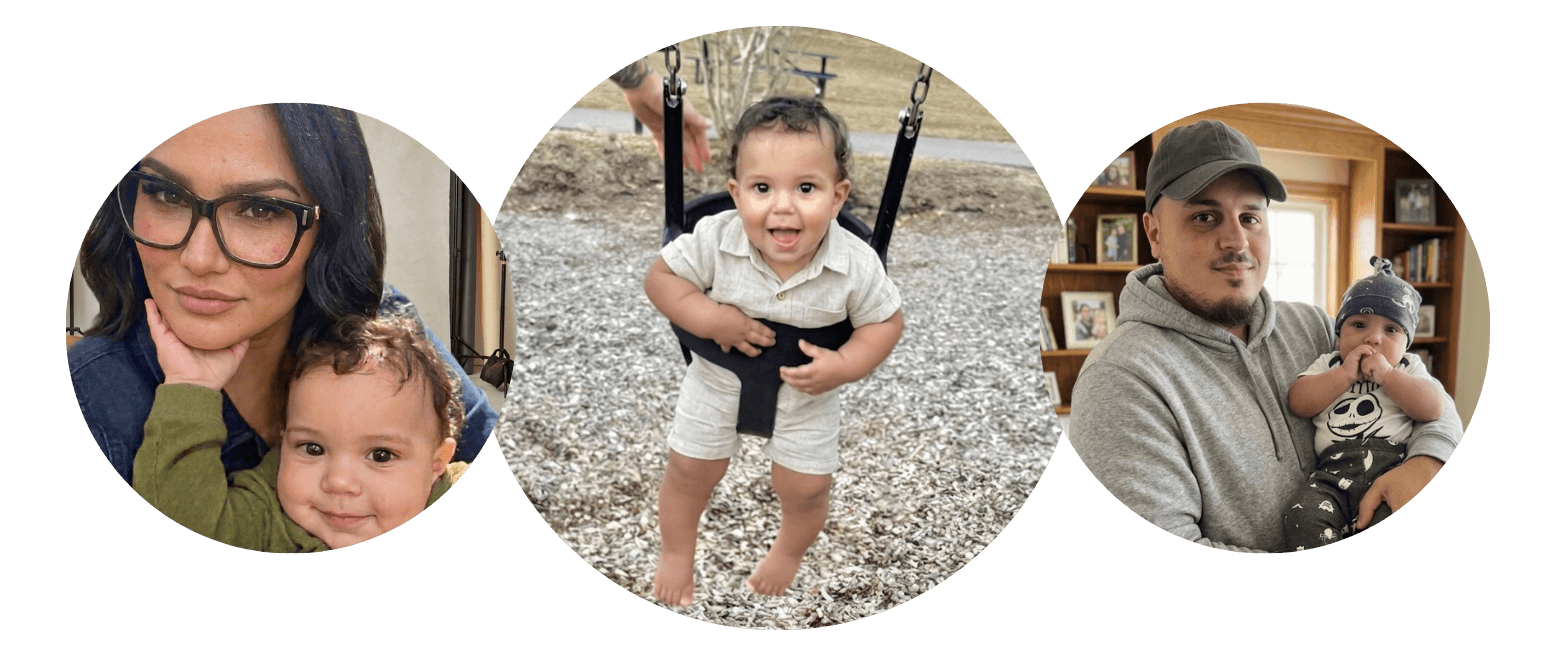
Photos: Asher with Samantha; enjoying the swing; Asher with Anthony.
The Second Opinion That Changed Everything
Here's something people rarely talk about: making the decision to switch clinics is hard. It can feel like giving up on a team that knows your history or starting over from square one.
But after years of unsuccessful treatment cycles at another fertility clinic closer to home, Samantha's OB/GYN suggested they schedule a consultation at Illume Fertility with Dr. Joshua Hurwitz. They decided to take that leap of faith.
It marked an emotional turning point for the couple, restoring a sense of forward momentum. They felt an immediate shift in the way they were treated by the team at Illume. They describe feeling heard and supported, with a care plan that felt tailored to their history rather than one-size-fits-all. "From the very beginning, we felt hopeful again," Samantha says.
Making the drive to Illume from their home in Dutchess County, New York felt like a small trade-off for the renewed sense of confidence they experienced. "The distance was never a question — we knew the journey would be worth it, and we’re so grateful we followed that instinct," she adds.
Another Hurdle to Clear
Before they started their first IVF cycle, a saline sonogram (SHG) identified polyps in Samantha's uterus. These small growths that can develop in the lining of the uterus are often benign, but can sometimes interfere with embryo implantation or increase the risk of miscarriage depending on their size and location.
To create a more optimal uterine environment before embryo transfer, Samantha underwent a surgical procedure called hysteroscopy with polypectomy.
What is a hysteroscopy?
A hysteroscopy is a minimally invasive procedure that allows your physician to look directly inside the uterus using a thin camera. It is commonly used to diagnose or treat structural findings such as polyps, scar tissue, or fibroids. Because hysteroscopy allows for more targeted treatment, it can play an important role in preparing for pregnancy.
Your IVF Prep Guide
Every IVF journey is different — and for some patients, there are unexpected steps to complete before transfer day. Our IVF nurse shares what you should know.

From Retrieval to Results: The First IVF Cycle
After Samantha recovered from her hysteroscopy procedure, the couple were ready to move forward with their first IVF cycle.
This process included ovarian stimulation with daily injections to encourage multiple eggs to mature, frequent monitoring appointments to track follicle growth, and finally, an egg retrieval procedure at Illume's surgical center in Norwalk, Connecticut.
Over the next few days, the couple's Care Team provided regular updates on how many eggs had fertilized and the number of embryos still developing. When they heard the news that they had seven embryos that had progressed to day 7 of development, Samantha and Anthony were cautiously optimistic.
It was a milestone they had never reached before.
Fresh vs. Frozen Embryo Transfer
When an IVF cycle produces viable embryos, one of the next decisions is timing: should the embryo be transferred in the same cycle it was created (a fresh transfer), or frozen and transferred in a later cycle (a frozen embryo transfer, or FET)?
There is no universal right answer. For some patients, a fresh transfer makes sense. For others, waiting gives the body a better chance at a successful implantation.
After ovarian stimulation, hormone levels are elevated and the uterine lining may not be in its most receptive state. A frozen transfer allows the body time to recover and reset, so conditions are as optimal as possible when the embryo is introduced.
Based on Samantha's medical history and uterine factors, her team at Illume recommended a frozen embryo transfer. It was one more step in a process that had already asked a lot of them — but a recommendation they trusted completely.
Does a thin lining mean transfer will fail?
"When transfer day came, we were nervous due to my uterine lining being on the thinner side, but we remained hopeful and continued to stay positive during the drive over to the clinic," Samantha recalls. Dr. Hurwitz reviewed her lining measurements and made the call to move forward with their embryo transfer.
The couple then leaned into the unknown and placed their trust in the hands of their team.
This is something many patients don’t realize until they’re in it themselves: a thin endometrial lining, often defined as under 7 mm, does not automatically rule out embryo transfer or the possibility of a healthy pregnancy.
In general, thicker linings are associated with higher implantation and pregnancy rates, while a thinner lining can make success less likely. But there is no single measurement that guarantees failure, and pregnancies can still occur depending on the full clinical picture.
"After two long weeks of waiting, we got the call — we were pregnant after just one frozen embryo transfer," Samantha recalls. "We’ll never forget that moment!"

Photos: Moments from Asher's first year; sharing smiles with big brother.
The Truth About Pregnancy After Loss
Another difficult part of this process that often goes unspoken: how getting a positive pregnancy test after infertility and loss doesn't always feel the way you imagined it would. For families expecting a rainbow baby, the initial relief and excitement are real, but so is the fear of losing everything again.
Even during pregnancy, the anxiety and uncertainty never fully dissipated for Samantha and Anthony. After all the challenges they had to navigate, it almost felt unreal. Like they were holding their breath, waiting for something to go wrong.
And then came the moment that changed everything: "The first time we heard our baby's heartbeat, time stood still," Samantha recalls. "In that single moment, everything broke open: the tears, the relief, and that sudden feeling of comfort. We knew this was it."
A Long-Awaited Moment
On June 9, 2025, Samantha and Anthony welcomed their son, Asher Michael. Holding him for the first time represented more than the arrival of a new member of their family. It marked the culmination of many years of hard work and unwavering hope.
They describe his birth as both grounding and joyful, a reminder of everything they had endured to reach this chapter. Today, they look at their baby boy, who is thriving, growing, and surpassing milestones, and see everything they fought for reflected back at them.
On Faith & Patience
Throughout every phase of treatment, Samantha and Anthony relied on their faith and on each other. Praying together became a source of comfort and connection, and their partnership became the anchor that carried them through even the hardest moments.
"In times of doubt, heartbreak, and waiting, we leaned on each other and trusted that our story was still unfolding," Samantha shares.
"Be gentle with yourself — this process is tough, and it's okay to feel everything that comes with it. Lean on your support system and your care team. Focus on what you can control, and hold on to hope in your own way. Try to trust the process."
Is IVF right for you?
Take our free fertility assessment to explore available treatment options, get recommendations, and see what your next steps might look like.

The Other Side of Infertility
"Life after fertility treatment feels like a beautiful new beginning," Samantha shares. "The struggles we faced make us appreciate every moment we have together as a family. This journey has only deepened our bond and reminded us how strong love, hope, faith, and perseverance can be."
Samantha and Anthony remain deeply grateful to Dr. Hurwitz, Dr. Murdock, and the rest of their Illume care team for guiding them with such compassion, patience, and unwavering support: "They didn't just treat our infertility: they walked beside us every step of the way."
"Our story was more than infertility, more than heartbreak, more than 'not yet' — it became one of hope, resilience, and the family we had dreamed of."
Ultimately, their journey wasn't just about overcoming obstacles and heartbreak. It was about growth, connection, and the profound joy that followed years of waiting for a tiny miracle. Their son Asher is a daily reminder that every single difficult moment was worth it.

Trying to conceive with PCOS?
Learn how personalized fertility treatment from PCOS specialists can help support your path to pregnancy.
